Category: sustainable-fashion

  • Izzy Manuel: A Vibrant Voice for Sustainable Fashion

    Izzy Manuel: A Vibrant Voice for Sustainable Fashion

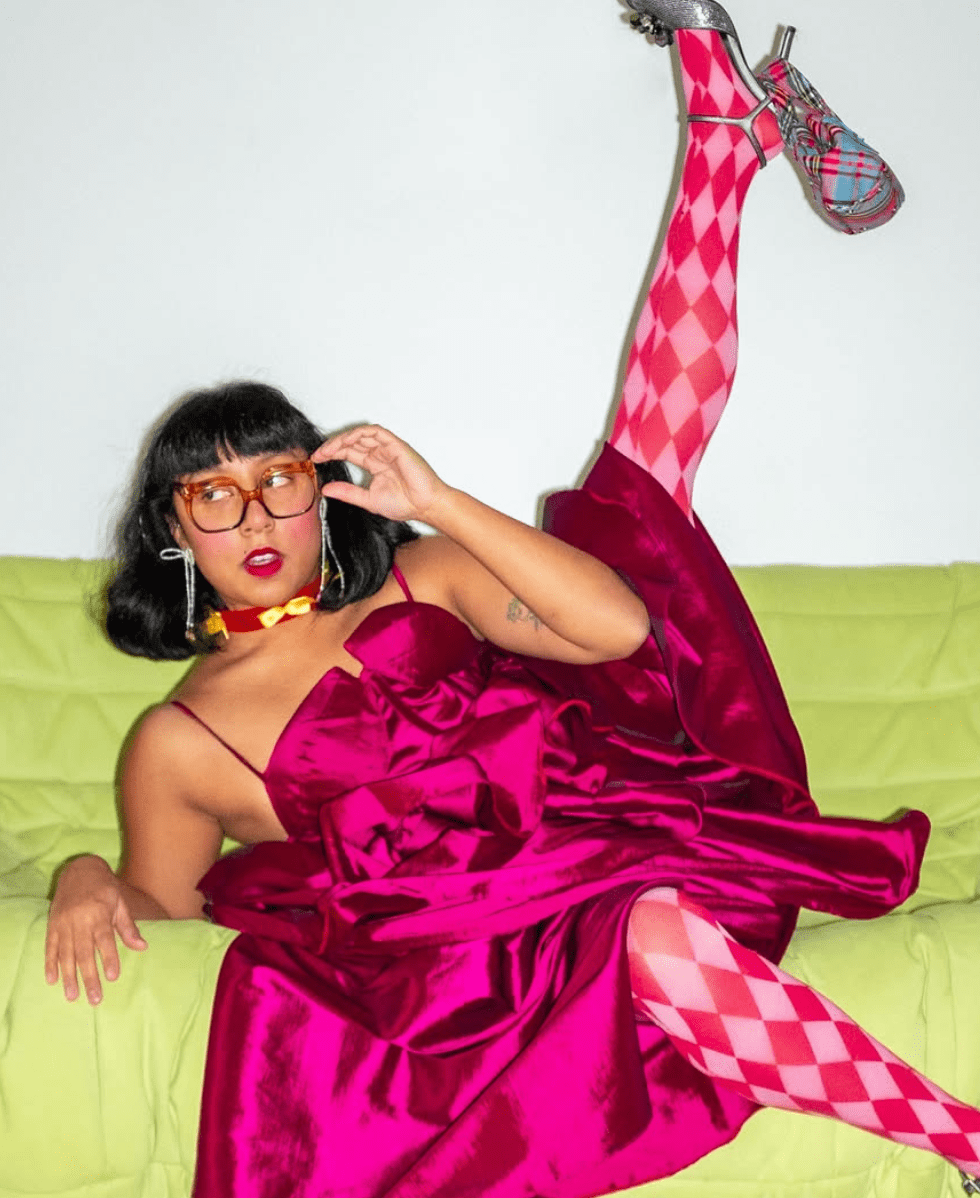
    In the ever-evolving world of sustainable fashion, few influencers capture the essence of style and eco-consciousness quite like Izzy Manuel. This Indian-Chinese fashion blogger has made waves in the industry with her colorful approach to slow fashion, proving that sustainability doesn’t mean sacrificing style.

    Izzy’s journey into sustainable fashion began with a simple realization: the fashion industry’s impact on the environment was too significant to ignore. Armed with this knowledge and a passion for vibrant aesthetics, she set out to transform her wardrobe and inspire others to do the same.

    What sets Izzy apart is her ability to create eye-catching ensembles using sustainable and second-hand pieces. Her Instagram feed is a testament to the possibilities of eco-friendly fashion, bursting with bold colors and unique combinations that challenge the notion that sustainable clothing is dull or limited.

    Izzy’s approach goes beyond just looking good. She actively educates her followers on the importance of making conscious fashion choices. From highlighting ethical brands to sharing tips on how to style thrifted items, Izzy provides practical advice for those looking to green their wardrobes.

    What makes Izzy’s work particularly impactful is her ability to inspire action. By showcasing her own sustainable fashion journey, she encourages her followers to reconsider their consumption habits and make more mindful choices.

    Izzy’s influence in the sustainable fashion community is significant. She’s not just talking about change; she’s actively promoting and living it. Her collaborations with ethical brands and participation in sustainability campaigns have helped bring attention to important issues within the fashion industry.

    As the fashion world continues to grapple with its environmental impact, voices like Izzy Manuel’s are crucial. She represents a new generation of influencers who understand that true style comes not just from what we wear, but from the values we uphold.

    Through her vibrant posts and thoughtful content, Izzy Manuel is helping to paint a more colorful, sustainable future for fashion. She proves that with creativity and consciousness, we can all contribute to a more ethical and stylish world.

    Check out her instagram here: https://www.instagram.com/izzy_manuel/

    (**Photo from her instagram)
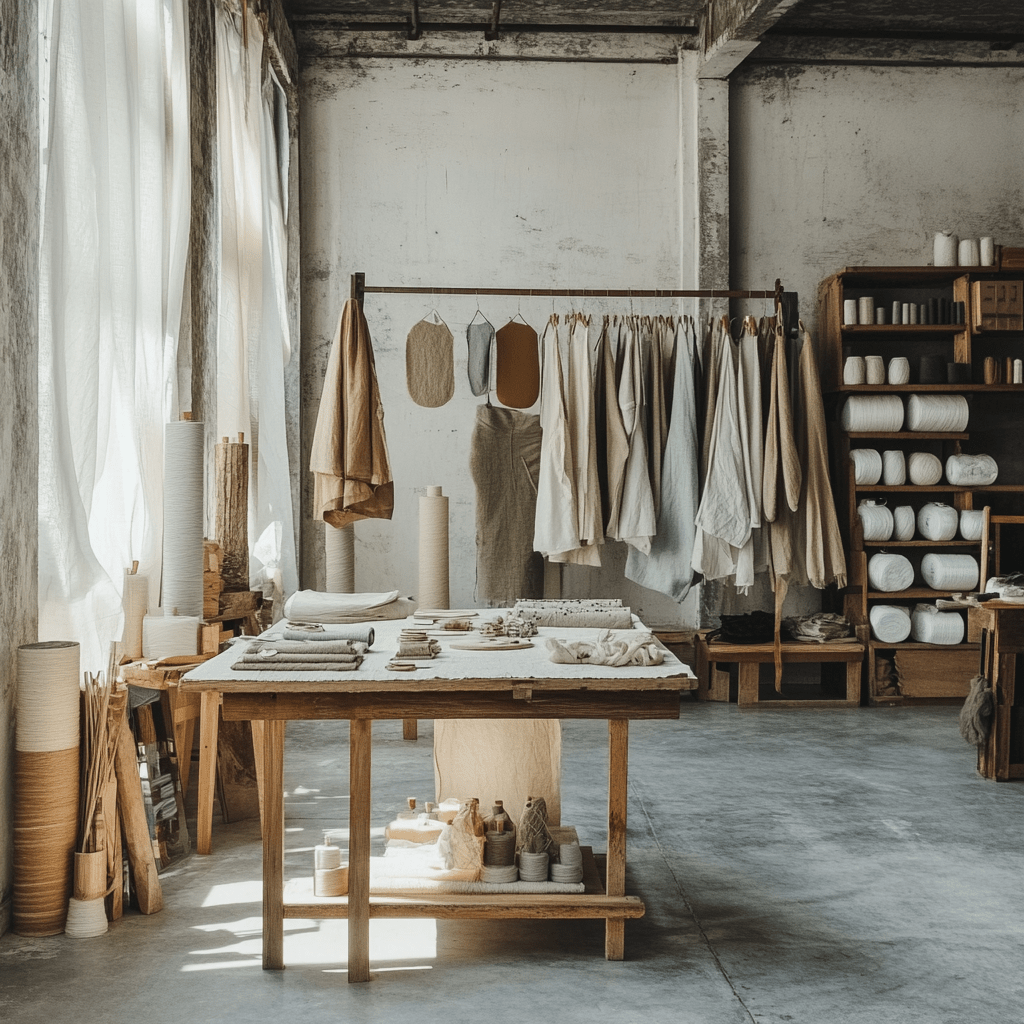
  • Threads of Change: 5 Sustainable Fabrics Shaping the Future of Fashion

    Threads of Change: 5 Sustainable Fabrics Shaping the Future of Fashion

    As the fashion industry increasingly acknowledges its environmental impact, the shift towards sustainable materials has become essential. Sustainable fabrics not only reduce ecological footprints but also promote ethical practices across the globe. Here, I want to explore various sustainable materials that are shaping the future of fashion, highlighting their benefits and cultural significance.

    1. Organic Cotton

    Organic cotton is a staple in sustainable fashion, grown without synthetic pesticides or fertilizers. This method preserves soil health and promotes biodiversity, making it a more eco-friendly choice compared to conventional cotton. The use of organic farming practices helps in conserving water and reducing pollution, which is crucial given that traditional cotton farming is notoriously water-intensive and chemically reliant.Brands worldwide are increasingly adopting organic cotton for casual wear and loungewear, aligning with the growing consumer demand for environmentally responsible products.

    2. Recycled Polyester

    Recycled polyester is made from post-consumer plastic waste, such as bottles and fabric scraps. This innovative material helps divert plastic from landfills while requiring significantly less energy and water to produce compared to virgin polyester. Many activewear brands have embraced recycled polyester for its durability and moisture-wicking properties, making it ideal for athletic clothing. This fabric not only supports a circular economy but also reduces the reliance on fossil fuels.

    3. Tencel (Lyocell)

    Tencel, or lyocell, is derived from sustainably sourced wood pulp, primarily eucalyptus trees. Its production involves a closed-loop process that recycles water and solvents, minimizing waste and pollution. Tencel is known for its softness and breathability, making it a popular choice for casual wear and undergarments. Its biodegradable nature further enhances its appeal in sustainable fashion, as it breaks down naturally without harming the environment.

    4. Hemp

    Hemp is one of the most eco-friendly fabrics available today. It grows quickly with minimal water and no need for pesticides, making it a resilient crop that benefits soil health.Hemp fibers are durable and biodegradable, which adds to their sustainability credentials. As more designers incorporate hemp into their collections, this versatile material is gaining recognition for its potential to replace more resource-intensive fabrics.

    5. Piñatex

    Piñatex is an innovative alternative to leather made from pineapple leaf fibers, a byproduct of the pineapple industry. This sustainable fabric not only reduces waste but also provides additional income to farmers. Piñatex is gaining traction in the fashion industry as a cruelty-free option that maintains durability while being environmentally friendly.

    The adoption of sustainable materials in fashion represents a significant step towards reducing the industry’s environmental impact. By choosing fabrics like organic cotton, recycled polyester, Tencel, hemp, and Piñatex, consumers can support ethical practices that support our Earth! As awareness grows, so does the potential for a more sustainable future in the global fashion landscape—one where style does not come at the expense of our planet.

    Learn more about sustainable fashion materials here: https://bamboorose.com/blog/top-8-sustainable-fashion-materials-for-clothing-brands/

  • Data Meets Design: The Power of Infographics in Sustainable Fashion Advocacy

    Data Meets Design: The Power of Infographics in Sustainable Fashion Advocacy

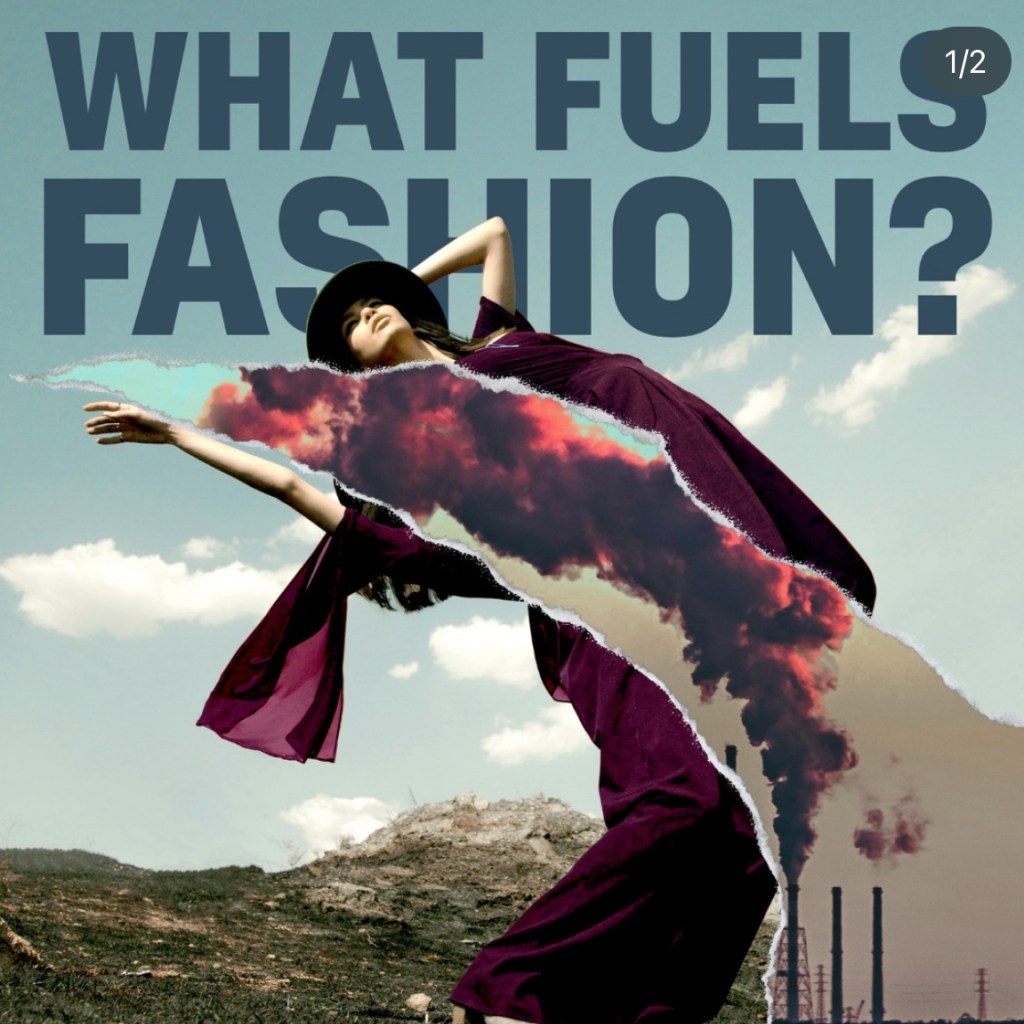
    Data visualization plays a crucial role in conveying complex sustainability issues to consumers, and one organization that excels in this area is Fashion Revolution, the group behind the annual Fashion Transparency Index. Let’s explore how they leverage data visualization to create a powerful impact in the sustainable fashion world.

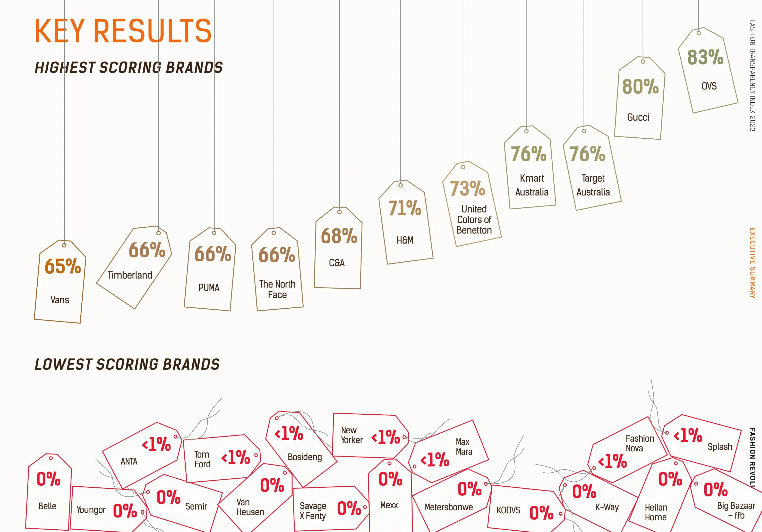
    Fashion Revolution’s Fashion Transparency Index is a prime example of how data can be transformed into compelling visual stories. This annual report assesses 250 of the world’s largest fashion brands and retailers based on their public disclosure of human rights and environmental policies, practices, and impacts.

    What makes Fashion Revolution’s approach stand out is their ability to distill complex supply chain data into easy-to-understand infographics and social media-friendly visuals. These graphics not only make the information more accessible to the average consumer but also more shareable, which aids in amplifying their message across social media platforms.

    One of their most effective visualizations is a simple yet impactful bar chart that shows the overall scores of fashion brands, ranging from 0-100%. This allows consumers to quickly compare brands and make informed decisions about their purchases.

    Fashion Revolution also creates bite-sized infographics for social media, highlighting key statistics from their research. For example, they might showcase that only 4% of brands disclose the number of workers in their supply chain who are paid a living wage. These simple, shareable graphics help spread awareness and encourage consumers to demand more transparency from fashion brands.

    By using data visualization, Fashion Revolution transforms information into a powerful tool for consumer education and industry accountability. Their approach demonstrates how effective data communication can drive real change in the fashion industry, making sustainability more tangible and actionable for everyone.

    As consumers, we can use these visualizations to make more informed choices about the brands we support. Brands all over can learn from Fashion Revolution’s example, using data visualization to tell compelling stories that inspire action towards a more sustainable fashion future.

    Here are some of these visuals! Check out more on their website and on their social media: https://www.fashionrevolution.org/fashion-transparency-index/

    (All images are from Fashion Revolution’s website or Instagram)

  • Beyond the Big Names: 10 Eco-Friendly Fashion Labels Making a Difference

    Beyond the Big Names: 10 Eco-Friendly Fashion Labels Making a Difference

    As a sustainable fashion fanatic, I’m always on the lookout for eco-friendly brands that are making a difference in the industry. While the big names like Patagonia often dominate the conversation, there are so many more amazing sustainable fashion brands around the world that deserve our attention as well. So here’s 10 under-the-radar labels that are changing the game that you should check out!

    1. PANGAIA

    This materials science company is revolutionizing the industry with its innovative fabrics. From seaweed fiber t-shirts to puffer jackets filled with wildflowers, PANGAIA proves that sustainability can be stylish.

    2. Vuori

    Based in California, Vuori is committed to climate neutrality while creating high-performance activewear. Their dedication to reducing their carbon footprint sets them apart in the athleisure space.

    3. Finisterre

    This UK-based brand is all about ocean conservation. Their surf-inspired clothing is made from recycled materials, and they even have a wetsuit recycling program.

    4. Passenger

    Another UK brand, Passenger, focuses on forest conservation. Their cozy, outdoorsy pieces are perfect for adventurers who care about our planet.

    5. Story MFG

    This slow fashion brand combines social activism with stunning, hand-crafted designs. Their pieces are dyed using natural ingredients and made in small batches. 

    6. Greater Goods

    Upcycling is the name of the game for Greater Goods. They transform discarded materials into unique, one-of-a-kind pieces that are as stylish as they are sustainable.

    7. E.L.V. Denim

    Based in East London, E.L.V. Denim creates luxury jeans from 100% upcycled materials. The commitment they have to reducing waste in the fashion industry is an inspiration to brands all over. 

    8. Sézane

    This Parisian brand proves that sustainability can be chic. With their limited-quantity items and eco-friendly production methods, Sézane is redefining style for the conscious consumer.

    9. Brøgger

    Danish designer Julie Brøgger believes that longevity is key to a greener wardrobe. Her label combines sharp tailoring with soft silhouettes, all produced with low-impact methods.

    10. Bassike

    This Australian brand has been committed to sustainable and ethical manufacturing since 2006. They’ve even achieved B Corp and carbon neutral certifications, proving their dedication to both people and planet.

    These brands are just a small sample of the incredible sustainable fashion innovation that is happening around the world. As consumers, we have the power to support these companies and push the industry towards a more eco-friendly future. So next time you’re looking to do a little shopping, consider checking out one of these sustainable brands. Not only will you get some really cool pieces to add to your closet, you also get to know your purchase is making a positive impact on our world. The environment as well as your wardrobe will thank you!

  • The Art of Upcycling: Refresh Your Wardrobe, While Reducing Your Waste

    The Art of Upcycling: Refresh Your Wardrobe, While Reducing Your Waste

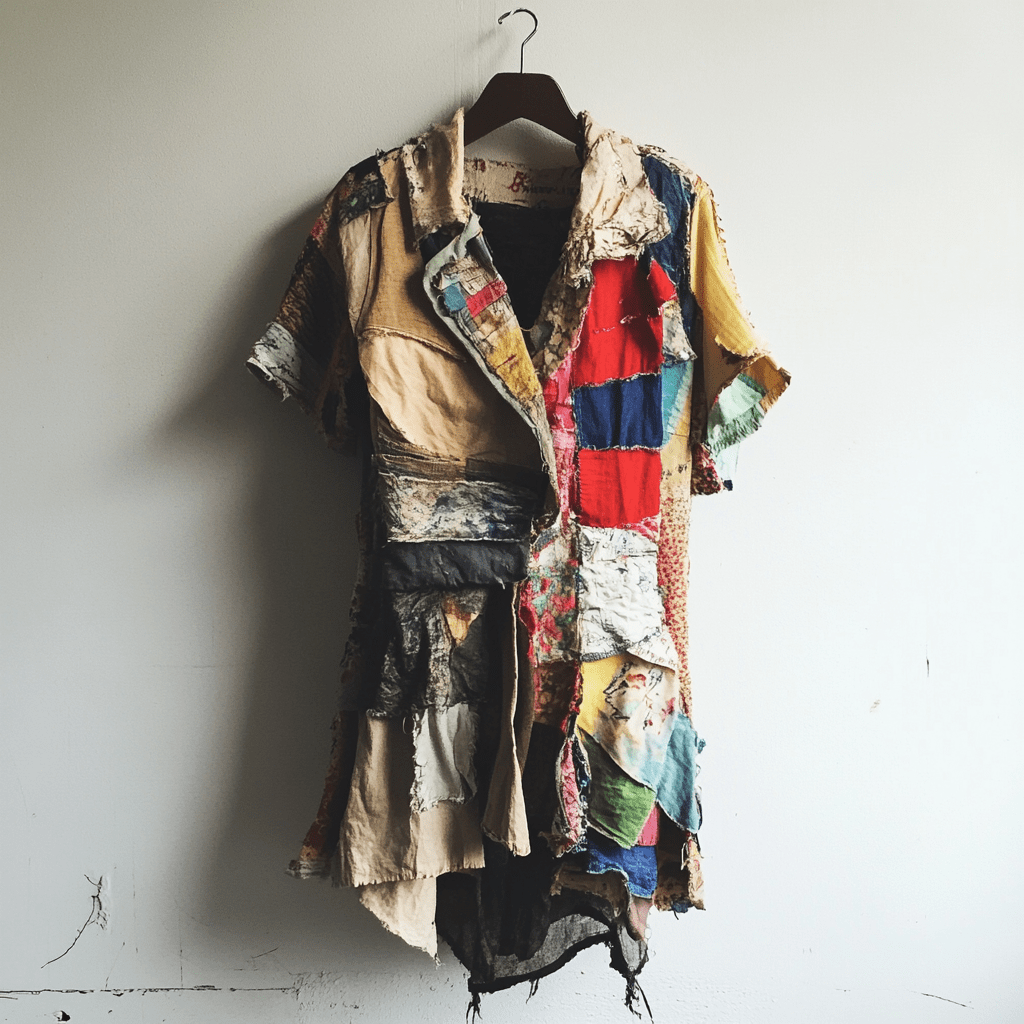
    Upcycling is a perfect way to reduce waste, save money, and create something entirely new. So what exactly does that mean in the field of fashion? Basically, upcycling means exactly what you think it would: transforming old or unused clothes into something entirely new which in turn helps cut down on textile waste while allowing you to add to your wardrobe. Here are some of my ideas on how you can get started with upcycling…

    Why Upcycle?

    Upcycling gives old clothes a second chance. Instead of throwing things away, you get to repurpose them, making something new while reducing your impact on the environment. It’s about seeing the potential in what you already own and creating personalized pieces that are one of a kind.

    Easy Upcycling Ideas

    Revamp Your Denim: Got an old pair of jeans? Turn them into a skirt, a tote bag, or even patchwork shorts. Denim is sturdy and versatile, so you can get creative without needing to be a sewing expert.

    Transform T-Shirts: Let’e bring back 2010.Cut an old T-shirt into a crop top, add fringe, or turn it into a reusable bag. You can additionally even use fabric paint to furthe make your new creation yours.

    Sweater Makeover: Oversized sweaters can be resized, cropped, or even used to make cozy accessories like leg warmers or fingerless gloves.

    Upcycling with Friends

    Even better, let’s upcycle with our friends. Host a clothing swap and throw an upcycle party! Bring old clothes, share ideas, and work on your projects together. Not only is it eco-friendly, but it’s a great excuse to see your friends and get new clothes out of it. What could be better than that? 

    Getting Started

    So how do we start? It’s simple. All you need to start upcycling are some basic sewing tools and maybe a tutorial or two and luckily in our day and age, there is a tutorial for quite literally anything and everything. Try experimenting with simple pieces first and as you continue you’ll develop new skills along the way.

    Make your wardrobe work for you!! Upcycling lets you reinvent your closet without buying anything new. So dive into your closet, get creative, and make something amazing out of what you aren’t even wearing anymore. Happy upcycling!

  • Mastering the Art of Thrifting: 7 Tips for Success

    Mastering the Art of Thrifting: 7 Tips for Success

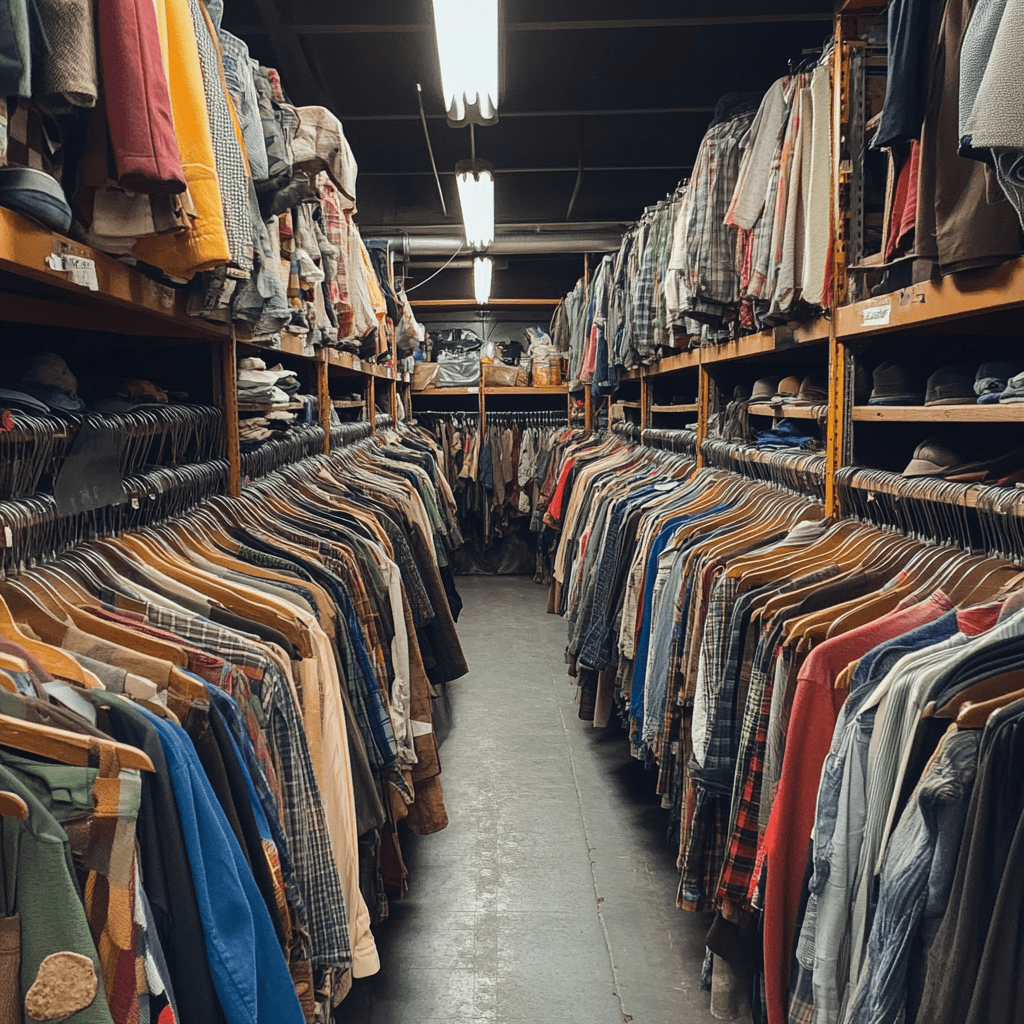
    I love shopping as much as the next person, but I do value trying to do so in a way that is positive for our planet! Let’s talk about thrifting—a favorite hobby of mine. Thrifting is an affordable, sustainable way to shop for unique fashion finds. It can also be overwhelming, with racks upon racks of clothes that may seem disorganized. Here are some key tips I’ve learned throughout my thrift journey to help you thrift like a pro and find your closet’s new favorite pieces!

    1. Go in With a Plan

    Avoid grabbing everything that catches your eye by setting a “wish list.” Are you looking for a denim jacket or a new sweater? Keeping specific items in mind can help you stay focused. But stay open—often, the best thrift finds are unexpected.

    1. Explore All Sections

    Don’t stick to just one section! The men’s racks have great oversized jackets and comfy sweaters, while the accessories section might hold unexpected treasures like scarves, hats, and belts. Also, try different sizes, as vintage clothes often have different sizing than modern clothes.

    1. Check for Quality and Versatility

    Focus on quality pieces that will last, such as wool, leather, and 100% cotton. Also, think about how versatile each item is—pieces like classic jeans, blazers, and neutral sweaters can easily blend into your wardrobe and be worn all the time.

    1. Take Your Time and Inspect Carefully

    The most important lesson in thrifting is that it requires patience! Take time to inspect each piece for stains, tears, or other flaws. Some damage is fixable with simple mending, but other issues may be dealbreakers. A quick look over the seams, zippers, and hems can save you from buying something that needs major repairs.

    1. Get Creative

    Not every thrift find will be perfect off the rack, but that’s where creativity comes in! If you find a nearly perfect item, consider simple DIYs like cropping a shirt or hemming pants to make it your own. Reworking clothes can be a fun way to personalize your finds. Also, clothes can be styled in many different ways beyond what they’re originally meant for. Let your imagination get to work!

    1. Know the Store’s Restock Days

    Ask when your favorite thrift stores restock to get the best selection. Weekdays and early mornings are often less crowded, giving you the first pick of new finds.

    1. Stay Patient and Persistent

    Thrifting success isn’t guaranteed every time, so don’t be discouraged if you don’t find anything amazing on one visit. Check back regularly, and remember that inventory is always changing. You never know when you’ll find your next favorite piece of clothing.

    Final Tip: Thrifting is about building a wardrobe you love. Choose pieces that bring you joy and that you’ll wear often. With patience and these simple strategies, you’ll soon be thrifting like a pro! Happy hunting!

  • Let’s Not Shop at Shein…

    Let’s Not Shop at Shein…

    Shein is a brand that has become synonymous with fast fashion. Known for its incredibly affordable clothing and rapid turnover of trendy styles, Shein has garnered a massive following through the years. However, the brand’s approach to corporate social responsibility (CSR) has come under intense scrutiny, and raises critical questions about the ethical and environmental implications about fast fashion. 

    One of the most alarming aspects of Shein’s operations is its labor practices. Investigations into the brand’s supply chain have unveiled alarming conditions in factories that produce Shein’s clothing. Reports indicate that many workers are subjected to grueling hours, often exceeding 12-hour shifts, with wages that are well below the legal minimum. In some cases, workers have been found to earn less than $3 per day. This exploitation reveals a disturbing lack of regard for the individuals behind the garments we wear.

    Shein’s business model is inherently unsustainable, contributing to a significant environmental crisis. The brand’s rapid production cycles encourage a culture of overconsumption where clothing is worn just a few times before being discarded for the next “trendy” piece. 

    Also, the production processes used by Shein are often resource-intensive, consuming vast amounts of water and energy while releasing harmful pollutants into the environment. The environmental footprint of fast fashion is staggering, and Shein’s practices exemplify the negative impact that comes with prioritizing speed and cost over sustainability.

    Shein’s rapid rise in the fashion industry reveals the dark reality of fast fashion. By choosing to support companies that prioritize fair labor conditions and sustainable production methods, we can collectively push for a more responsible fashion industry. Shein serves as a reminder that  we can advocate for a fashion future that respects both people and the planet.

    So let’s Stop shopping at Shein…

  • Combining Glamour with Green-Let’s talk about Sustainable Fashion Week

    Combining Glamour with Green-Let’s talk about Sustainable Fashion Week

    I think it’s safe to say that most of us have heard of Paris Fashion Week.

    A time when huge designers and brands release their upcoming collections in front of a huge national audience. People tune in and talk about Paris Fashion Week from all over the world. This show has been widely regarded for quite some time now. But perhaps it’s time for a new fashion week to have its moment in the spotlight. While it’s less known, its impact definitely isn’t. Step aside, Paris Fashion Week – it’s time for Sustainable Fashion Week (SFW) to shine and show the world how fashion can be a force for environmental healing and thoughtful consumption.

    Sustainable Fashion Week 2024, which took place in the United Kingdom from September 23rd to the 29th, was a hub of inspiration and action. This year, SFW didn’t disappoint, offering an exciting lineup of events, from workshops and clothing swaps to markets, catwalks, and other activities designed to make sustainability accessible and engaging. What truly sets Sustainable Fashion Week apart is its grassroots, community-centered approach. Rather than showcasing exclusive collections, SFW focuses on education and participation, aiming to empower individuals to make environmentally friendly choices in their everyday fashion decisions. This approach makes SFW an event run by the people, for the people – a collaborative effort that reveals its sustainability mission.

    With four years under its belt, Sustainable Fashion Week has firmly established itself as a powerful event that reaches beyond the fashion elite to engage a broader everyday audience. Participants from various backgrounds come together to learn, share, and act, united by a common goal: to make fashion sustainable and socially responsible. SFW’s format is also unique in that it includes two core components: SFW Hubs, which are regional centers hosting activities, and the Community Fringe, which encompasses independently organized events like repair cafes, styling sessions, and educational discussions. This structure ensures that sustainability is woven into local communities, making it accessible to all.

    Sustainable Fashion Week is more than a single event; it’s a movement aimed at changing our relationship with fashion. While Paris Fashion Week might capture the world’s attention with high-profile shows, SFW is quietly fostering a shift in how we view fashion’s role in the world. Through education, community, and creative expression, it’s inspiring a new generation of consumers to consider the impact of their fashion choices. So as we look forward to the future of fashion, it’s clear that Sustainable Fashion Week is here to stay – hopefully paving the way towards a greener and more conscious fashion industry. 

    Find more information here: https://www.sustainablefashionweek.uk/sfw-2024

  • Curate Your Closet: Less is Chic

    Curate Your Closet: Less is Chic

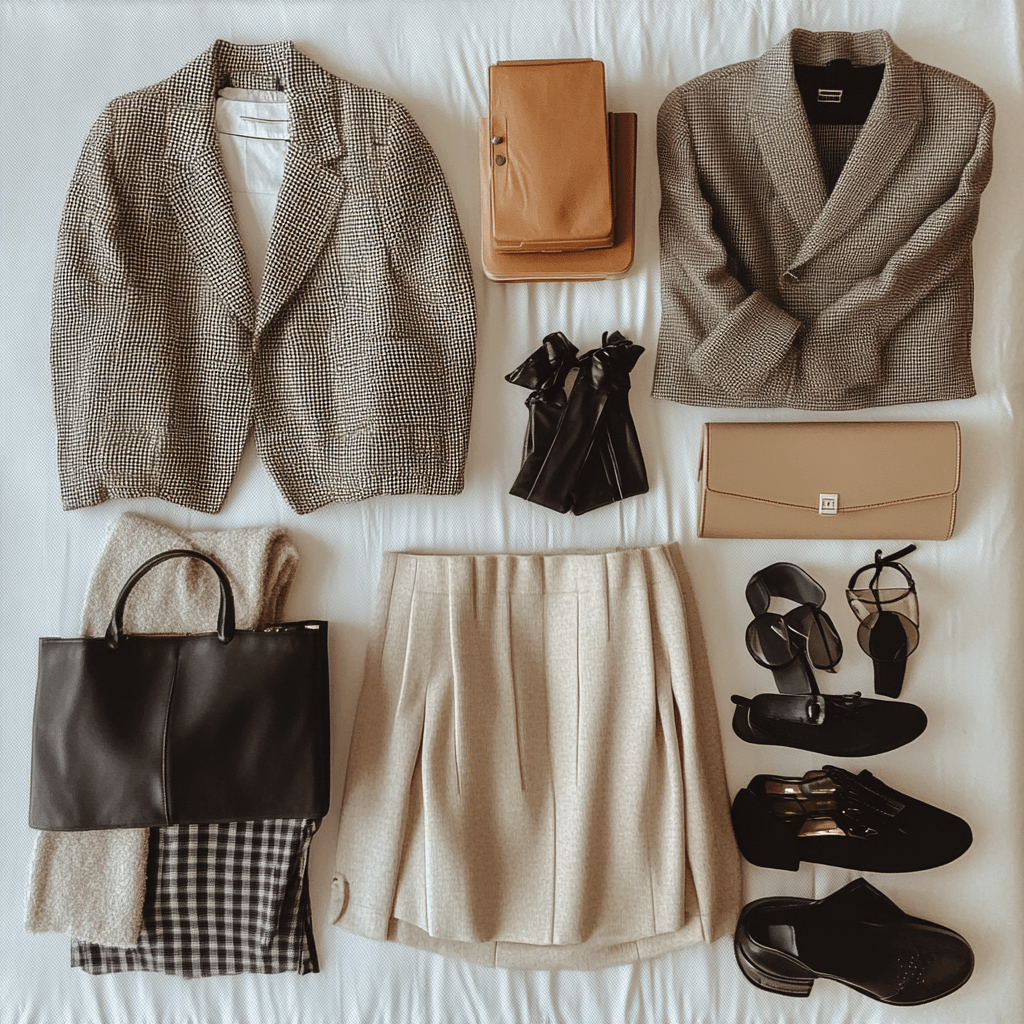
    So, what exactly is a capsule wardrobe? At its heart, it’s a curated collection of versatile, high-quality pieces that can be mixed and matched to create a huge variety of outfits. The idea is to focus on quality over quantity, which is not quite a common occurrence in a typically fast-fashion culture.

    One of the best things about a capsule wardrobe is that it encourages you to invest in pieces you really love and will wear all the time. Instead of buying a bunch of trendy items that will get thrown out a few months later, you can opt to find good pieces that will last longer than the next trend comes around. For example, a favorite pair of jeans that you could see yourself wearing all the time with whatever added flair makes you feel like yourself.

    Reducing the number of clothes we buy helps us decrease the demand for fast fashion production, which is a massive contributor to environmental waste. The fashion industry uses tons of water and energy, so every little bit counts when it comes to avoiding high rates of consumption. A capsule wardrobe challenges the narrative and commonality of consumer culture and can lead to the promotion of the idea that less is more when it comes to protecting our planet.

    This concept can also offer a great opportunity for companies to position themselves as leaders in sustainable fashion. Brands that promote capsule wardrobes can showcase their commitment to quality and responsible practices, appealing to consumers who care about their environmental footprint.

    There are so many practical tips on how to style a few key pieces in different ways, showing that a smaller wardrobe can still be stylish and functional. It’s a great reminder that you don’t need a massive closet to express your personal style, and it can even promote thinking outside the box when you pick out your outfit in the morning. Not to mention, having a well-thought-out wardrobe can make getting dressed a lot easier each day!

    Capsule wardrobes are amazing sustainable options for fashion consumers. They encourage us to be more intentional with our clothing choices while promoting a more eco-friendly approach to the world of fashion. As more people embrace this concept, we can help shift the normalization mindset of consumer culture.

    Want to start your capsule wardrobe? Here’s some tips: http://www.un-fancy.com/capsule-wardrobe-101/how-to-build-a-capsule-wardrobe/

  • “Fashion Forward: The Movement for Good”

    “Fashion Forward: The Movement for Good”

    The impact of fashion on the environment is hard to ignore. Fashion For Good is a nonprofit organization that knows just that. This organization focuses on promoting sustainable practices in the fashion industry, aiming to inspire change among brands and their consumers.

    Founded in 2017, Fashion For Good believes that collaboration is a crucial part of driving sustainability in the fashion realm. By connecting startups with established brands, they create partnerships that encourage and cultivate innovative solutions. This approach helps to break down barriers and fosters a community dedicated to more responsible practices in fashion.

    One of its most notable initiatives is the Fashion For Good Accelerator, which supports startups focused on sustainable innovations by providing them with funding, mentorship, and access to a network of industry experts. By encouraging and nurturing new talent, this organization aims to empower emerging designers and fashion creators to find solutions that can lessen the harsh environmental impact of the fashion industry.

    Another important initiative from this organization is Circular Fashion, which encourages brands to rethink how clothing is made and used. By promoting recycling, upcycling, and the idea of extended garment life, Fashion For Good is directly addressing the issue of waste and overconsumption in the industry.

    Fashion For Good connects with a real-world audience of consumers who care about the environment. Their “Good Fashion” campaign showcases real stories from brands that have made the shift to more sustainable practices. By highlighting the journeys of companies that have successfully implemented environmentally friendly methods, they inspire both the industry and consumers about the positive changes happening around them.

    In essence, Fashion For Good is more than just a nonprofit; it aims to be a leader in the incredibly important movement to create greater sustainability in the industry. Through innovation and collaboration, they’re working to change the industry into one that values the planet. Their goals aim to guide the world of fashion toward a happier and healthier planet for all.

    For more information about these innovations, check out: https://fashionforgood.com